

How to ride safely?
On an e-bike, you often ride faster than on a regular bike. It's important to know the traffic rules and adjust your behaviour accordingly.
Always seek eye contact with other road users to make sure they have seen you.
Mandatory cycle lane
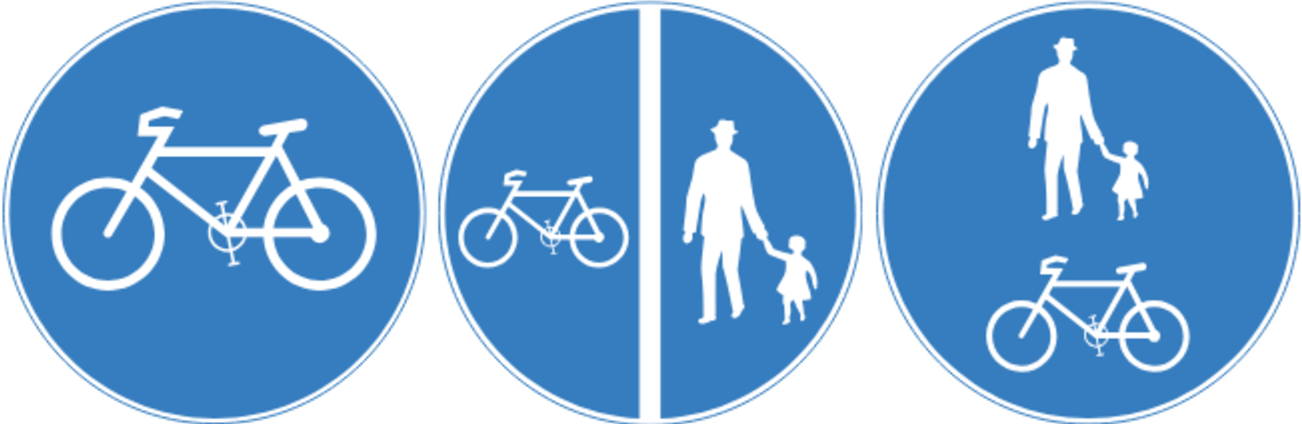
When you see a round blue sign with a white bicycle, the cycle lane is mandatory: you must leave the road and use it.
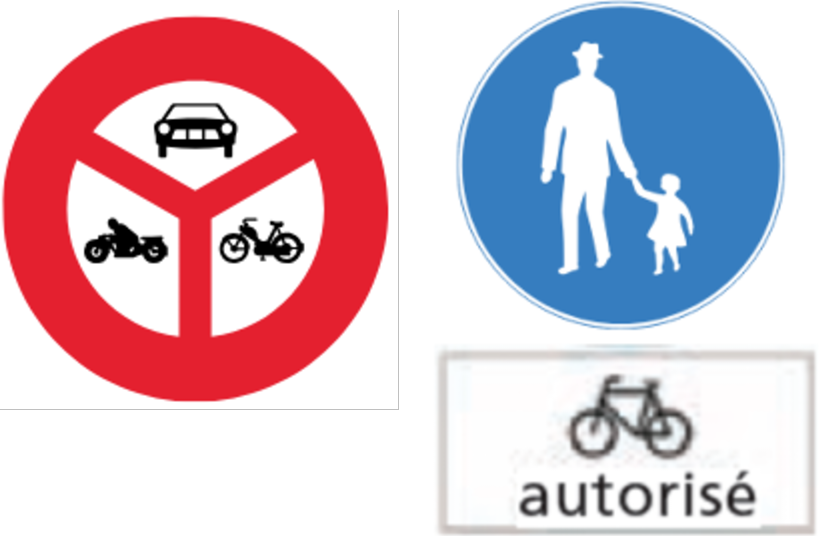
These signs permit cycling without making it mandatory — in this case, it's up to you.
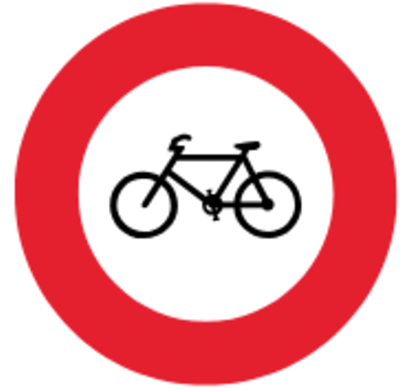
If you see a prohibition sign for cyclists (red circle with a bicycle), you are not allowed to cycle on that road.
Turning right on red
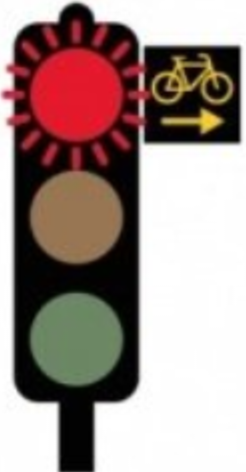
Some intersections have a special sign allowing cyclists to turn right on red. This sign turns the red light into a "give way": you may turn right, but you must give way to pedestrians crossing.
Bike box
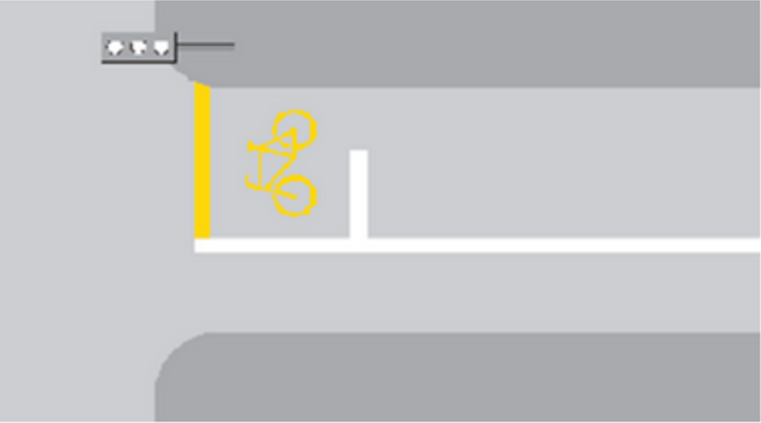
At traffic lights, you may find a bike box: a space reserved for cyclists in front of cars. If there is room and you can do so safely, move to the front and position yourself in this space. You'll be more visible and can start ahead of the vehicles when the light turns green.
Riding through a roundabout
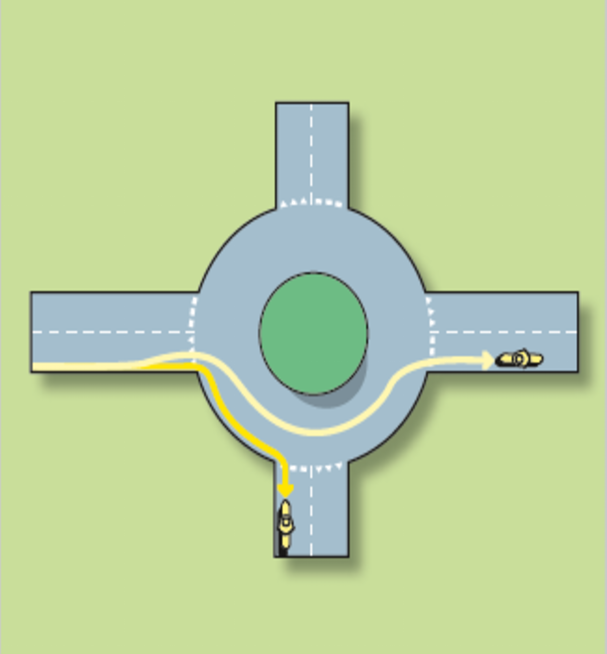
In a roundabout:
- Position yourself in the middle of the traffic lane to be clearly visible if you're not taking the first exit.
- Signal your exit by extending your right arm before leaving the roundabout.
- Don't hug the outer edge — stay in the middle of the normal traffic lane.
Turning left
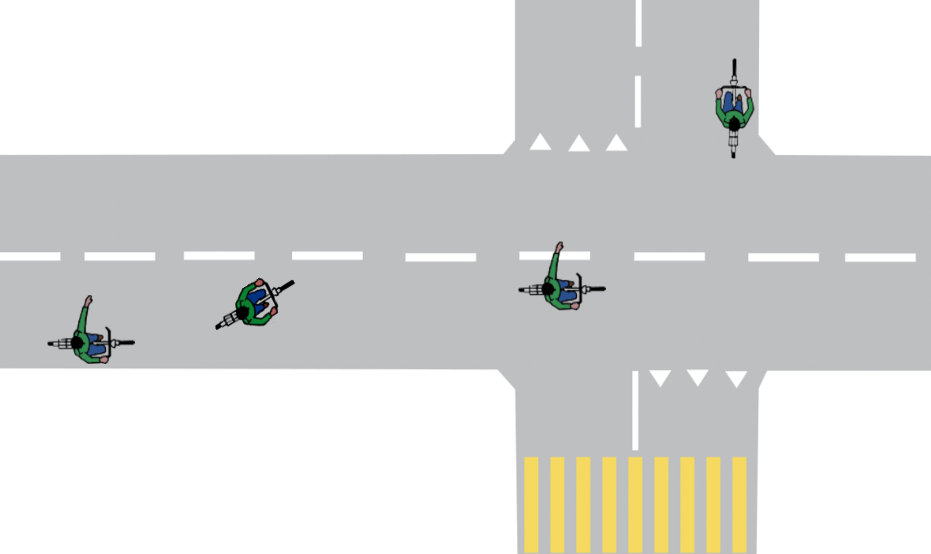
To turn left at an intersection:
- About 30 metres before the intersection, look behind you to make sure you've been seen.
- Extend your left arm to signal your direction.
- Move to the left side of the lane.
- If a vehicle is coming from the opposite direction, wait. Otherwise, turn with both hands on the handlebars.
Braking distance
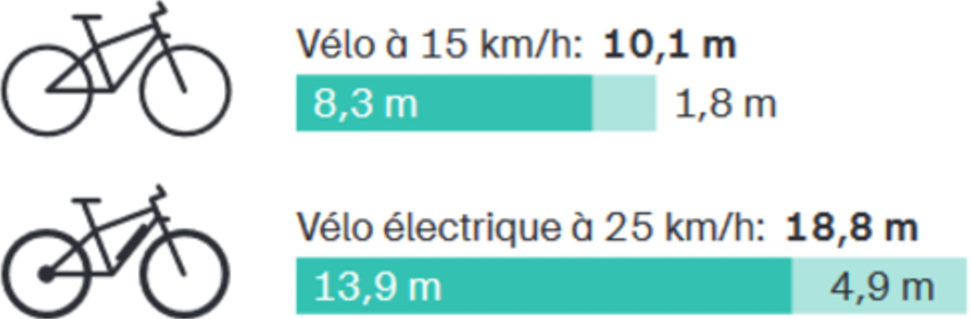
On an e-bike, you ride faster than on a regular bike. Other road users often underestimate your speed, and your braking distance is longer than they expect.
Stay aware of your surroundings, anticipate braking, and always keep a safe distance from vehicles and pedestrians.