

GuideRenting or buying an electric bike: what are the options in Switzerland?7 min read
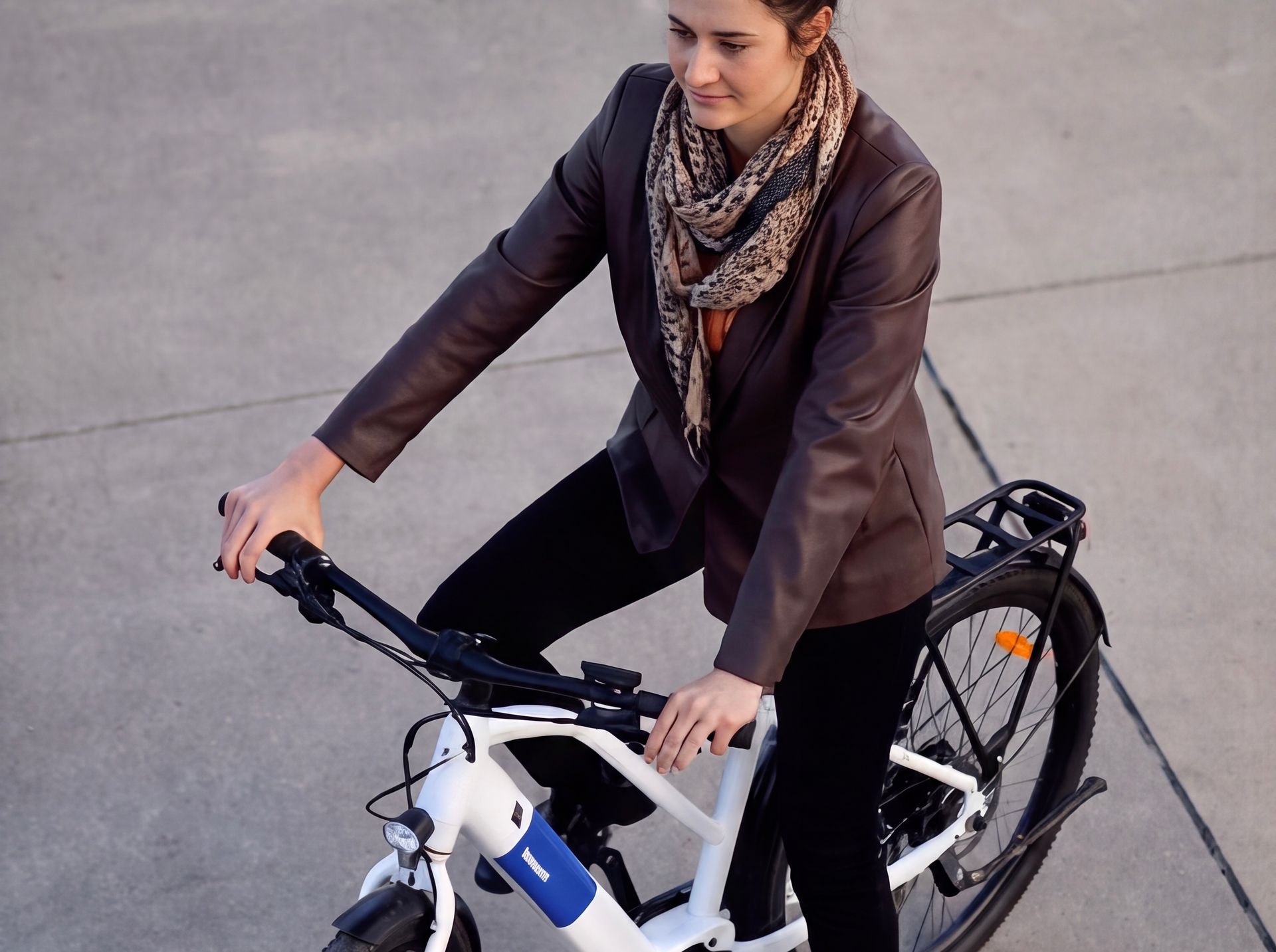
Renting or buying an electric bike? It is the question that comes up as soon as you seriously consider leaving the car in the garage. Buying a new bike is an investment of several thousand francs, while a monthly subscription starts at 79 francs. The difference is obvious, but it does not say much on its own. What really separates the two options is what happens over time.
The purchase price is only the starting point
In Switzerland, a new electric bike costs around 4,500 francs on average. Ranges go from under 1,500 francs, usually with basic components, up to 6,000 francs for models designed for intensive use. A reliable urban bike for daily use generally sits between 2,500 and 3,500 francs.
Buying can be a perfectly sensible choice. It lets you choose exactly the model you like and keep it for as long as you want. The bike can also be resold. Just keep in mind that the initial purchase price is not the total cost. An electric bike creates regular expenses, most of them predictable, that many buyers do not include in their starting budget. Here they are, without exaggeration.
The battery: a timeline, not a breakdown
The battery is the most expensive part of the bike, and the only one that wears even when you are not riding. A lithium-ion battery is measured in charge cycles. Over time, its capacity slowly decreases. Your range first drops almost imperceptibly, then more noticeably. Count on four to six years of daily use before replacement becomes necessary.
In Switzerland, that replacement costs around 500 francs. There is nothing unusual about this: it is the expected behaviour of a battery, much like tyres wearing on a car.
Theft and damage: a real risk that needs proper cover
The numbers are documented. Between 2019 and 2023, the number of electric bikes stolen in Switzerland was multiplied by five. According to AXA, an electric bike theft costs insurers an average of 2,830 francs, and more than 95% of stolen bikes never find their way back to their owner.
This does not mean that a purchased bike is doomed. It means you need to lock it to a fixed structure, even for a short stop, and insure it properly. Many owners only look closely at their insurance cover after something happens. Household contents insurance protects your bike if it is stolen at home, in the cellar or in the garage. If it disappears outside the station or at work, you need the "simple theft away from home" add-on. This cover appears in most policies, but its limit is often around 2,000 francs, with a 200-franc deductible. On a 3,000-franc bike, the difference remains yours to pay.
For proper cover against theft and damage, expect 60 to 120 francs per year for a 25 km/h bike. Damage from a fall almost always requires an additional module.
Maintenance: an ongoing cost, not a surprise
An electric bike is still a bike. Chains, brake pads, tyres and cables wear out, sometimes a little faster than on a conventional bike because of the motor's weight and torque. On top of that come checks specific to the electric system: motor diagnostics, battery condition and software updates depending on the brand.
In Switzerland, an annual workshop service costs between 100 and 200 francs, with an average of around 150 francs. Wear parts can add up to 100 francs per year. Nothing excessive, but it is a recurring cost to plan for, along with the days when the bike is at the workshop and you cannot use it.
The TCS gives a useful benchmark: for urban use of around 1,000 kilometres per year, the real cost of an electric bike is between 0.60 and 0.90 francs per kilometre, all included.
What rental changes in practice
An all-inclusive electric bike subscription does not make these costs disappear. It transfers them, and smooths them out.
At Torks, 79 francs per month covers maintenance, repairs, theft insurance and bike exchange. The important word is exchange. If your bike breaks down or is stolen, it is repaired or replaced within three days. No claim form, no coverage limit to check, no deductible to pay upfront, no week without a bike. You keep riding.
The battery is no longer your concern. Neither is wear on the parts. The bike is built for urban use: light, with mudguards and a rear rack. The lock is included. It is limited to 25 km/h, which puts it legally in the same category as a conventional bike: no plate, no licence and no registration. The commitment starts at one month.
Your bike, at your home
One misunderstanding comes up often: rental is not bike sharing and it is not leasing. The Torks bike is yours in daily life. You take it home, park it in your cellar or garage, use it whenever you want, as much as you want, without walking to a station or opening an app before every trip. Nobody else rides it.
Renting or buying an electric bike: the comparison
| Purchase (3,000 CHF bike) | Torks rental (79 CHF/month) | |
|---|---|---|
| Initial cash outlay | Around 3,150 CHF with accessories | 0 CHF |
| Cost in the first year | Around 3,500 CHF | 948 CHF |
| Cumulative cost over 3 years | Around 4,200 CHF | 2,844 CHF |
| Cumulative cost over 5 years | Around 5,400 CHF | 4,740 CHF |
| Maintenance and servicing | At your expense, around 250 CHF per year | Included |
| Battery replacement | Around 500 CHF after 4 to 6 years | Included |
| Theft insurance | To be purchased, 60 to 120 CHF per year, capped | Included, with no cap to monitor |
| In case of theft | Bike lost, partial compensation | Bike replaced |
| In case of breakdown | Downtime and repair bill | Bike repaired or replaced |
| Daily use | Your bike, at your home | Your bike, at your home, for your exclusive use |
| Ownership | Yes, with resale value | No, with no buyout option |
| Exit | Uncertain resale | Monthly cancellation |
Assumptions: 25 km/h urban bike at 3,000 CHF, 150 CHF of accessories, 350 CHF in annual costs (service, wear parts, insurance, electricity), one battery replacement in the fifth year. Resale value is not included.
Over five years, rental remains cheaper. More importantly, it is predictable: the same amount every month, on a schedule you know in advance.
When does buying still make sense?
Buying can become interesting in the sixth or even the seventh year. It does, however, require several things to go right: keeping the same bike for six years, never having it stolen, preserving the battery, finding a buyer at the right moment and accepting every service appointment. Six years is a long time. A move, a job change or a theft is enough to break the calculation and push the benefit further away.
What to remember
Renting or buying an electric bike is not a simple choice between cheap and expensive. It is a choice between a fixed amount known in advance and a series of expenses whose timing and size you do not fully control.
Torks rental gives you a bike that belongs to your daily routine, keeps rolling, and comes at a price you know. It absorbs theft, breakdowns, battery wear and workshop visits. Over the first five years, it costs less than buying a new bike.
The best way to know whether an electric bike fits your daily life is still to try one. Torks offers a free 30-minute test ride near you, with no commitment.
If the choice is between two subscriptions rather than between buying and renting, also read our Torks vs Decathlon comparison.